

Digital Marketing for Small Businesses: The Complete Guide to Growing Your Business Online
Every Day You Delay Marketing, Your Competitors Get Ahead
Imagine opening your shop every morning.
Your products are great.
Your prices are competitive.
Your customer service is excellent.
But nobody walks through the door.
Now imagine another business selling almost the same products.
They're constantly posting helpful content on social media.
Their website appears on Google.
Customers leave glowing reviews.
They send useful emails.
People recommend them.
Guess who wins?
Not because they have the better product.
Because they're easier to find.
This is exactly what happens online every single day.
Many small business owners believe digital marketing is expensive, confusing, or only for large companies with huge budgets. The truth is the opposite.
Today, digital marketing has created one of the biggest opportunities for small businesses to compete with national brands—without spending millions.
In this guide, you'll learn exactly how digital marketing works, why it matters, and which strategies actually help small businesses generate traffic, leads, and sales.
What Is Digital Marketing?
Digital marketing is the process of promoting your products or services using online channels to attract, engage, and convert potential customers.
Instead of relying only on newspapers, flyers, or word of mouth, businesses use digital platforms where customers already spend their time.
Examples include:
Search engines like Google
Social media platforms
Email marketing
Content marketing
Online advertising
Video marketing
Search Engine Optimization (SEO)
Local business listings
The goal isn't simply to get more visitors.
The goal is to turn those visitors into paying customers.
Why Digital Marketing Matters for Small Businesses
Small businesses often face the same challenges:
Limited marketing budget
Low brand awareness
Strong competition
Few referrals
Slow sales growth
Without an online presence, customers may never discover your business—even if you offer better products or services than your competitors.
Digital marketing helps solve these problems by making your business visible when customers are actively searching for solutions.
According to research from the Google Business Profile Help, millions of people search every day for local businesses, products, and services before making a purchase.
If your business doesn't appear online, those customers will likely choose someone else.
Benefits of Digital Marketing for Small Businesses
Reach More Customers
Unlike traditional advertising, digital marketing allows you to reach customers beyond your local area.
Whether you own a coffee shop, online store, consulting business, or freelance service, your audience can discover you 24/7.
Build Trust Before Selling
People rarely buy from businesses they've never heard of.
They research first.
They visit your website.
Read reviews.
Browse social media.
Compare prices.
Watch videos.
The more helpful information you provide, the more trust you build.
Generate Consistent Leads
One social media post disappears quickly.
A well-written blog article or optimized website can continue bringing visitors for months—or even years.
That's why content marketing is considered one of the highest-return marketing investments.
Measure Everything
Traditional advertising often leaves you guessing.
Digital marketing provides measurable data like:
Website visitors
Click-through rates
Conversion rates
Customer acquisition cost
Return on investment (ROI)
Tools like Google Analytics help businesses understand what's working and what needs improvement.
The Most Effective Digital Marketing Strategies
1. Search Engine Optimization (SEO)
SEO helps your website appear in Google search results.
Imagine someone searches:
Best coffee shop near me
Affordable web designer
Pet food in New Zealand
Digital marketing agency
If your website ranks higher, you receive more organic traffic without paying for every click.
Good SEO includes:
Keyword research
Helpful content
Fast website speed
Mobile-friendly design
Internal linking
Quality backlinks
Google's SEO Starter Guide provides excellent best practices for beginners.
2. Content Marketing
Content marketing focuses on educating your audience rather than constantly selling to them.
Examples include:
Blog articles
Guides
Tutorials
Videos
Checklists
Free resources
Case studies
Helpful content positions your business as an expert while attracting potential customers through search engines.
If you're just starting, publishing one high-quality article each week is far more valuable than posting low-quality content every day.
3. Social Media Marketing
Social media isn't just about posting photos.
It's about building relationships.
Choose platforms where your customers already spend time.
Examples:
Facebook
Instagram
LinkedIn
TikTok
Pinterest
YouTube
Share:
Customer success stories
Educational tips
Behind-the-scenes content
Frequently asked questions
Product demonstrations
Focus on consistency rather than chasing viral posts.
4. Email Marketing
Email remains one of the highest ROI marketing channels.
Instead of relying entirely on social media algorithms, email gives you direct access to your audience.
Build your email list by offering:
Free ebooks
Templates
Checklists
Guides
Discounts
Exclusive resources
Platforms like Mailchimp and Brevo make email marketing accessible for businesses of all sizes.
5. Local SEO
If your business serves a specific location, local SEO is essential.
Optimize your:
Google Business Profile
Business hours
Contact information
Reviews
Photos
Location pages
This increases your chances of appearing in Google's Local Pack when nearby customers search for services.
6. Paid Advertising
Organic growth takes time.
Paid advertising helps accelerate results.
Popular platforms include:
Google Ads
Facebook Ads
Instagram Ads
LinkedIn Ads
Even a modest budget can generate qualified leads when campaigns are well targeted.
The key is testing, measuring, and improving—not simply increasing your ad spend.
Common Digital Marketing Mistakes Small Businesses Make
Many businesses invest time and money but still struggle because they:
Build a website without SEO
Ignore mobile users
Post inconsistently
Focus only on selling
Never track analytics
Forget to collect email subscribers
Have slow-loading websites
Use weak calls to action
Ignore customer reviews
Avoiding these mistakes often delivers faster improvements than chasing the latest marketing trends.
A Simple Digital Marketing Plan for Beginners
If you're overwhelmed, start with these five steps:
Week 1
Create or improve your website.
Week 2
Set up:
Google Business Profile
Google Analytics
Google Search Console
Week 3
Publish one helpful blog article.
Week 4
Share it on social media.
Week 5
Start building your email list with a free lead magnet.
Repeat this process consistently.
Small improvements compound into significant growth over time.
The Future of Digital Marketing
Artificial intelligence is changing how businesses create content, analyze data, and automate repetitive tasks.
Tools like ChatGPT, Canva AI, and Google AI can help small businesses work more efficiently.
However, technology should enhance your marketing—not replace genuine expertise, creativity, and customer relationships.
The businesses that succeed will combine AI with authentic, human-centered marketing.
Final Thoughts
Digital marketing isn't about chasing every new platform or trend.
It's about understanding your customers, solving their problems, and consistently showing up where they're already looking.
You don't need a massive budget.
You don't need a large team.
You simply need the right strategy, patience, and a willingness to keep learning.
The sooner you invest in digital marketing, the sooner your business becomes easier to find, easier to trust, and easier to grow.
Every customer starts somewhere.
Today, that journey usually begins online.
Make sure your business is there when they start searching.
Learn From Trusted Industry Resources
If you want to deepen your digital marketing knowledge, these trusted resources are worth exploring:
Google Digital Garage Archive for free digital marketing courses and certifications.
Google Search Central for SEO documentation and search best practices.
Google Analytics Academy Archive for analytics learning resources.
HubSpot Marketing Blog for inbound marketing, SEO, and content marketing insights.
Mailchimp Marketing Library for email marketing guides and small business tips.
Meta Blueprint for Facebook and Instagram advertising education.
LinkedIn Marketing Solutions for B2B marketing and professional networking strategies.
Semrush Blog for SEO, keyword research, and competitive analysis.
Ahrefs Blog for advanced SEO and link-building strategies.
Canva Design School for creating professional marketing visuals.
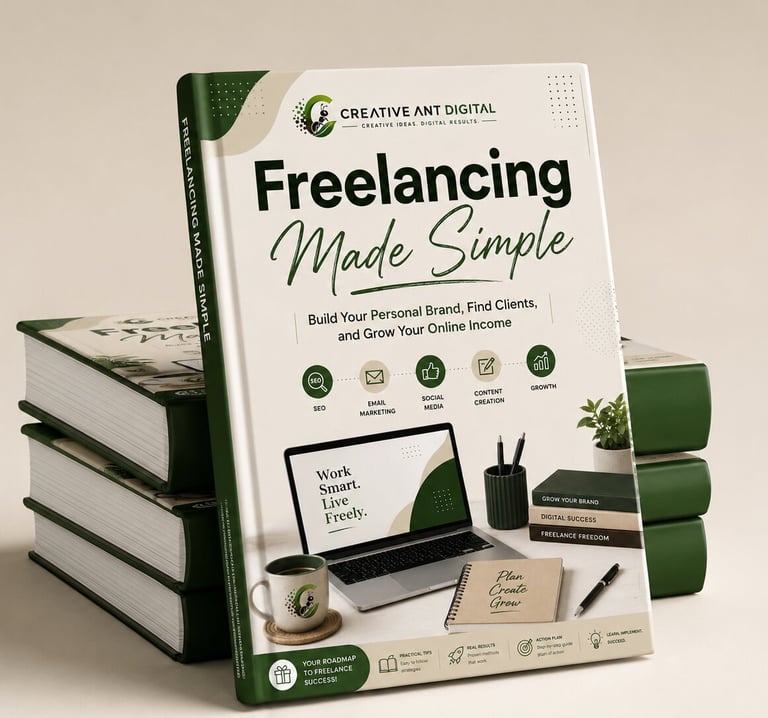
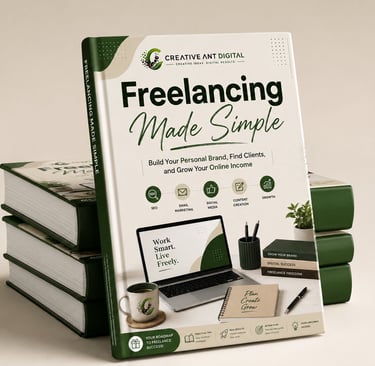
🎁 Free Freelancer Success Kit
Everything You Need to Start Freelancing—Free
Start your freelance journey with practical resources designed to help you build your personal brand, attract clients, stay organized, and grow your online income.
What's Inside:
📘 Freelancing Made Simple (Ebook)
📅 30-Day Freelancer Planner
🤖 100 AI Prompts for Freelancers
💼 Portfolio Template
💰 Invoice Template
📄 Client Proposal Template
📆 Content Calendar Template
✅ Freelancer Checklist
✓ Instant Access
✓ 100% Free
✓ No Experience Required
Related Articles