


SEO Tips for Freelancers: How to Get Found by Clients Without Paying for Ads
Why Are Some Freelancers Getting Clients While Others Stay Invisible?
Imagine this.
You spend months learning digital marketing.
You build a website.
You create a portfolio.
You post on social media.
Yet the inquiries never come.
Meanwhile, another freelancer appears on Google, attracts visitors every day, and consistently receives client inquiries.
What's the difference?
The answer is often SEO.
Search Engine Optimization (SEO) is one of the most powerful long-term strategies freelancers can use to attract clients without relying on paid advertising.
If you're tired of chasing leads and constantly looking for your next project, SEO can help clients find you instead.
In this guide, you'll learn practical SEO tips for freelancers and discover how business owners can use the same strategies to generate more traffic, leads, and sales.
The Biggest Problem Most Freelancers and Business Owners Face
Many freelancers and small business owners share the same frustration:
"No one can find my website."
The reality is simple.
Even the best website won't generate results if nobody sees it.
Common challenges include:
Low website traffic
No inquiries or leads
Poor Google rankings
Limited brand visibility
Overdependence on social media
Spending money on ads with little return
The good news?
Most of these problems can be improved with SEO.
What Is SEO and Why Does It Matter?
SEO is the process of improving your website so it appears higher in search engine results.
For freelancers, SEO can help attract:
Potential clients
Business partnerships
Job opportunities
Brand visibility
For business owners, SEO can help:
Increase website traffic
Generate leads
Build authority
Reduce reliance on paid advertising
Think of SEO as a 24/7 salesperson working for your business.
Unlike paid ads, SEO continues delivering results long after content is published.
SEO Tip #1: Understand What Your Audience Is Searching For
Many websites focus on what they want to say.
Successful websites focus on what people are searching for.
For example:
Instead of targeting:
"Marketing Services"
Target:
SEO Tips for Freelancers
How to Find Digital Marketing Clients
Best Digital Marketing Tools for Freelancers
How to Build a Freelance Marketing Portfolio
These are real questions people are actively searching for.
Use tools such as Google Keyword Planner and Google Search Console to discover opportunities.
SEO Tip #2: Create Helpful Content That Solves Problems
Google rewards content that helps people.
Ask yourself:
What questions are my potential clients asking?
For business owners:
Pain Point:
"Our website gets traffic but no sales."
Solution:
Create content that addresses buyer concerns and demonstrates expertise.
For freelancers:
Pain Point:
"I can't get clients."
Solution:
Publish educational content that positions you as an expert.
Every blog post should solve a problem.
SEO Tip #3: Build Topic Authority
One article rarely ranks a website.
A collection of related articles builds authority.
For example:
Digital Marketing for Freelancers
├── How to Do Digital Marketing as a Freelancer
├── Digital Marketing Tips for Aspiring Freelancers
├── How to Find Digital Marketing Clients
├── Best Digital Marketing Tools for Freelancers
├── How to Build a Freelance Marketing Portfolio
└── SEO Tips for Freelancers
This signals expertise to Google.
It also improves user experience through internal linking.
SEO Tip #4: Optimize Every Page Title
Your page title is often the first thing people see on Google.
Weak Title:
"Marketing Services"
Strong Title:
"SEO Tips for Freelancers: How to Get Found by Clients"
A compelling title increases clicks and improves visibility.
SEO Tip #5: Focus on Search Intent
Many websites target keywords but ignore intent.
Example:
Someone searching:
"How to build a freelance marketing portfolio"
Wants guidance.
They do not want a sales pitch.
Understanding search intent helps you create content that matches what visitors are looking for.
SEO Tip #6: Improve Website Speed
A slow website can hurt rankings and user experience.
Business Owner Pain Point:
"My website looks great but visitors leave quickly."
Solution:
Compress images
Reduce unnecessary scripts
Use modern image formats
Optimize page loading times
A fast website keeps visitors engaged.
SEO Tip #7: Use Internal Links Strategically
Internal links help Google understand your website.
They also encourage visitors to explore more content.
For example:
When discussing portfolio building, link to:
How to Build a Freelance Marketing Portfolio
When discussing clients, link to:
How to Find Digital Marketing Clients
This improves both SEO and engagement.
SEO Tip #8: Build Trust Through Expertise
Google increasingly rewards expertise and credibility.
Ways to build trust:
Publish original insights
Share personal experiences
Use case studies
Reference reputable sources
Keep content updated
Trust is one of the most valuable SEO assets.
SEO Tip #9: Track Your Results
SEO is not guesswork.
Use:
Monitor:
Traffic
Clicks
Impressions
Top-performing pages
Data reveals what's working and where opportunities exist.
SEO Tip #10: Stay Consistent
One blog post won't transform your business overnight.
Consistency wins.
Many successful websites publish content regularly for months before seeing significant growth.
The key is to keep creating valuable content that solves real problems.
Common SEO Mistakes Freelancers and Business Owners Make
Targeting Broad Keywords
Competing for:
"SEO"
is extremely difficult.
Competing for:
"SEO Tips for Freelancers"
is much more achievable.
Ignoring User Experience
Good SEO is not just about rankings.
It's about helping visitors find what they need.
Publishing and Forgetting
SEO is an ongoing process.
Review and update content regularly.
The Long-Term Benefits of SEO
When done correctly, SEO can:
Generate consistent traffic
Attract qualified leads
Build authority
Increase trust
Reduce advertising costs
Create long-term growth
Unlike ads that stop when your budget ends, SEO can continue working for years.
Final Thoughts
Many freelancers and business owners believe they need a bigger budget to grow online.
In reality, they often need a better SEO strategy.
The websites that consistently attract traffic and clients aren't always the largest.
They're the ones providing the most value.
Start by understanding your audience.
Create content that solves problems.
Build authority through consistency.
Track your results.
And remember:
The goal of SEO isn't simply ranking higher.
The goal is connecting the right people with the solutions they are already searching for.
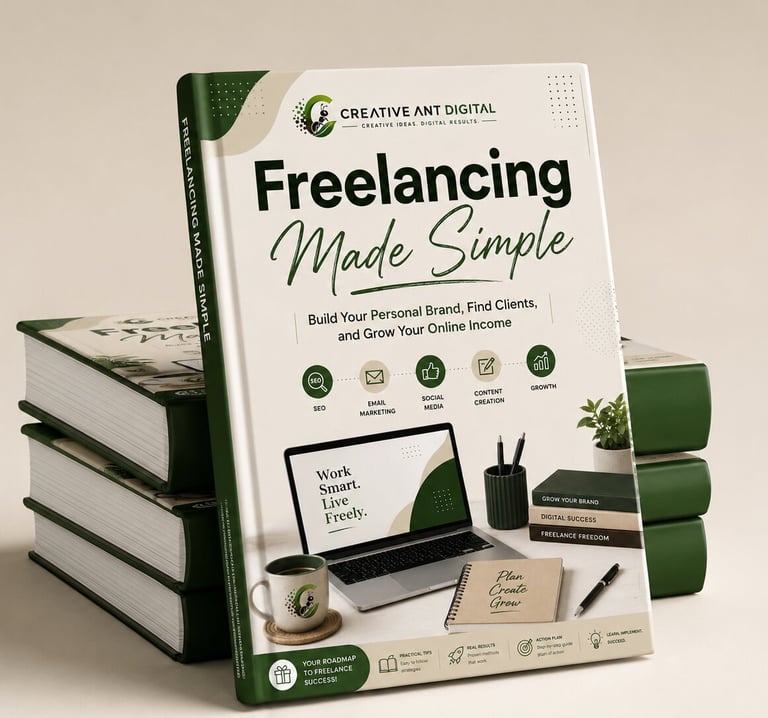
🎁 Free Freelancer Success Kit
Everything You Need to Start Freelancing—Free
Start your freelance journey with practical resources designed to help you build your personal brand, attract clients, stay organized, and grow your online income.
What's Inside:
📘 Freelancing Made Simple (Ebook)
📅 30-Day Freelancer Planner
🤖 100 AI Prompts for Freelancers
💼 Portfolio Template
💰 Invoice Template
📄 Client Proposal Template
📆 Content Calendar Template
✅ Freelancer Checklist
✓ Instant Access
✓ 100% Free
✓ No Experience Required
Related Articles