
Why Your Website Gets Traffic But No Customers (And How to Fix It)
Why Your Website Gets Traffic But Doesn't Convert
You've done everything you were told to do.
You invested in SEO.
You posted consistently on social media.
You even spent money on Facebook or Google Ads.
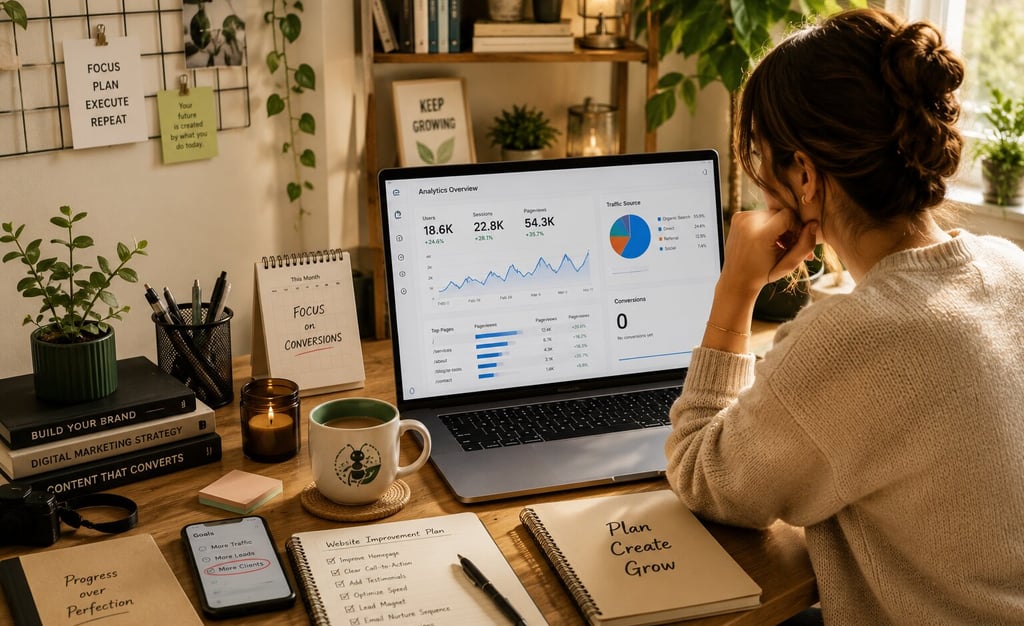
Your website analytics show hundreds—or maybe thousands—of visitors every month.
But your inbox is still quiet.
No enquiries.
No bookings.
No sales.
No new clients.
If this sounds familiar, you're not alone.
One of the biggest misconceptions in digital marketing is believing that more traffic automatically means more customers.
It doesn't.
A website without conversions is like a busy shop where everyone walks in, looks around, and leaves without buying anything.
The real question isn't "How do I get more traffic?"
It's:
"Why aren't my visitors becoming customers?"
Let's uncover the biggest reasons why your website isn't converting—and more importantly, how you can fix it.
Traffic Is Only Half of the Equation
Many business owners celebrate increasing website traffic.
And while that's exciting, traffic alone doesn't pay the bills.
Imagine opening a café.
Hundreds of people walk through the door every day.
They admire the interior.
Take photos.
Look at the menu.
Then leave.
Would you call that business successful?
Probably not.
The same thing happens online.
Your goal isn't just attracting visitors.
Your goal is converting visitors into customers.
1. You're Attracting the Wrong Audience
One of the most common reasons websites fail is simple.
You're bringing in visitors who were never going to buy.
For example:
Someone searching "What is SEO?"
Someone searching "Best free logo makers"
Someone looking for free templates
These people are researching—not purchasing.
Instead, focus on search intent.
Target keywords that indicate someone is ready to take action.
Examples include:
Hire a digital marketing freelancer
Shopify expert for small business
SEO services for local businesses
Website designer near me
When your content matches what buyers are actually searching for, conversions improve dramatically.
2. Your Website Doesn't Build Trust
People buy from businesses they trust.
If visitors land on your website and immediately feel uncertain, they'll leave.
Ask yourself:
Does your website look modern?
Are there real testimonials?
Do you show previous work?
Do visitors know who they're working with?
Is your contact information easy to find?
Trust is built through transparency.
Include:
Client testimonials
Portfolio examples
Case studies
Professional photos
Certifications
Clear business information
According to Google's guidance on creating helpful content, demonstrating real expertise and trustworthiness plays a key role in building confidence with users.
3. Your Message Isn't Clear
Many websites try to say everything.
As a result, visitors understand nothing.
Within five seconds, a visitor should immediately know:
What you do
Who you help
Why they should choose you
What they should do next
Instead of writing:
We provide innovative digital solutions.
Try something like:
Helping freelancers and small businesses grow with SEO, Shopify, and digital marketing strategies that drive real results.
Clear messaging converts.
Confusing messaging doesn't.
4. You Don't Have a Strong Call-to-Action
Imagine walking into a store where nobody asks if you need help.
That's what happens when your website lacks a clear call-to-action (CTA).
Every page should encourage visitors to take the next step.
Examples include:
Book a Free Consultation
Get a Free Website Audit
Download Our Free Freelancer Starter Kit
Request a Quote
Contact Us Today
Avoid making visitors guess what to do next.
Guide them.
5. Your Website Loads Too Slowly
Visitors are impatient.
Even a few extra seconds can increase bounce rates and reduce conversions.
Slow websites often suffer from:
Large image files
Too many plugins
Poor hosting
Heavy scripts
Unoptimized code
Regularly test your site using tools like Google PageSpeed Insights and focus on improving loading speed, especially on mobile devices.
Fast websites create better user experiences—and happier visitors are more likely to become customers.
6. Your Website Isn't Mobile Friendly
More than half of all website traffic comes from mobile devices.
Yet many websites still look fantastic on desktop and terrible on phones.
Check whether your website:
Loads quickly on mobile
Has readable text
Features buttons that are easy to tap
Displays forms correctly
Keeps navigation simple
A poor mobile experience often means lost customers.
7. You're Asking for Too Much Too Soon
Many businesses expect visitors to buy immediately.
But most people aren't ready on their first visit.
Instead of pushing for an instant sale, offer something valuable first.
Examples include:
Free ebooks
Checklists
Templates
Website audits
Email courses
Resource libraries
This is called a lead magnet.
By collecting email addresses, you can continue building trust until visitors are ready to buy.
8. You Don't Show Social Proof
People naturally look for reassurance before making decisions.
That's why reviews and testimonials matter.
Include:
Google Reviews
LinkedIn recommendations
Client testimonials
Before-and-after results
Success stories
Portfolio projects
The more evidence you provide, the easier it becomes for visitors to trust your business.
9. You're Not Measuring What Matters
Many business owners only look at traffic numbers.
But traffic doesn't reveal the full picture.
Instead, monitor metrics such as:
Conversion rate
Bounce rate
Average engagement time
Contact form submissions
Email sign-ups
Button clicks
These insights show where visitors lose interest and where improvements are needed.
Data should guide your decisions—not assumptions.
10. You're Solving the Wrong Problem
Many websites focus on features.
Customers care about outcomes.
Instead of saying:
10 years of experience
SEO services
Shopify development
Explain the benefits:
Get more qualified leads.
Increase online sales.
Improve search engine visibility.
Save time with marketing automation.
Build a website that converts visitors into customers.
People buy solutions—not services.
A Simple Website Conversion Checklist
Before trying to increase your traffic, make sure your website can convert the visitors you already have.
Ask yourself:
✅ Is my message clear?
✅ Does my website load quickly?
✅ Is it mobile-friendly?
✅ Do I have a strong call-to-action?
✅ Do I show testimonials?
✅ Do I explain the benefits instead of just the features?
✅ Am I collecting leads?
✅ Do visitors trust my business?
If you answered "No" to several of these questions, you've identified opportunities to improve your website's performance.
Final Thoughts
Getting traffic is an achievement.
But traffic without conversions is simply a missed opportunity.
Instead of constantly chasing more visitors, focus on creating a website that builds trust, communicates clearly, solves real problems, and guides people toward taking action.
Sometimes, doubling your conversion rate can have a bigger impact than doubling your traffic.
Remember:
A successful website doesn't just attract visitors—it turns them into loyal customers.
Learn More from Trusted Industry Resources
If you want to improve your website's performance and increase conversions, these trusted resources are worth exploring:
Google Search Central – SEO best practices, search performance, and helpful content guidance.
Google PageSpeed Insights – Test your website speed and Core Web Vitals.
Google Analytics Help Center – Learn how to measure website traffic and user behavior.
HubSpot Marketing Blog – Conversion optimization, lead generation, and inbound marketing strategies.
Microsoft Clarity – Free heatmaps and session recordings to understand visitor behavior.
Hotjar – Heatmaps, user recordings, and customer feedback tools.
Nielsen Norman Group – Research-backed articles on usability and user experience.
Think with Google – Consumer behavior, marketing trends, and conversion insights.
🎁 Free Freelancer Success Kit
Everything You Need to Start Freelancing—Free
Start your freelance journey with practical resources designed to help you build your personal brand, attract clients, stay organized, and grow your online income.
What's Inside:
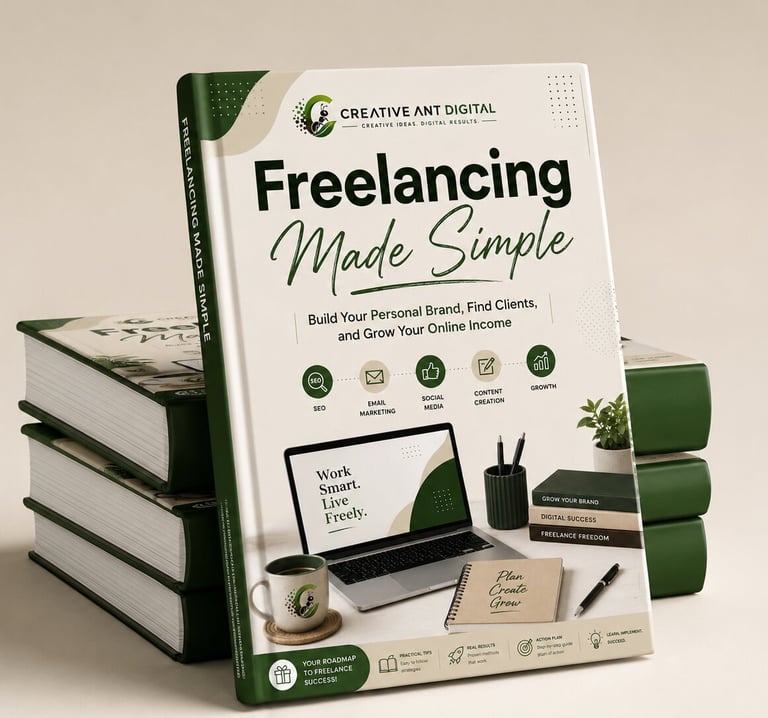
📘 Freelancing Made Simple (Ebook)
📅 30-Day Freelancer Planner
🤖 100 AI Prompts for Freelancers
💼 Portfolio Template
💰 Invoice Template
📄 Client Proposal Template
📆 Content Calendar Template
✅ Freelancer Checklist
✓ Instant Access
✓ 100% Free
✓ No Experience Required
Related Articles